The problem
Traditional scheduling apps like Calendly are functional but “soul-less.” For my birthday, I wanted a booking experience that acted as a gatekeeper to an exhibition—something that felt like a terminal from a sci-fi archive rather than a corporate calendar. I also faced technical hurdles when 3rd-party scripts clashed with cross-site cookie policies, threatening the launch.
What I built
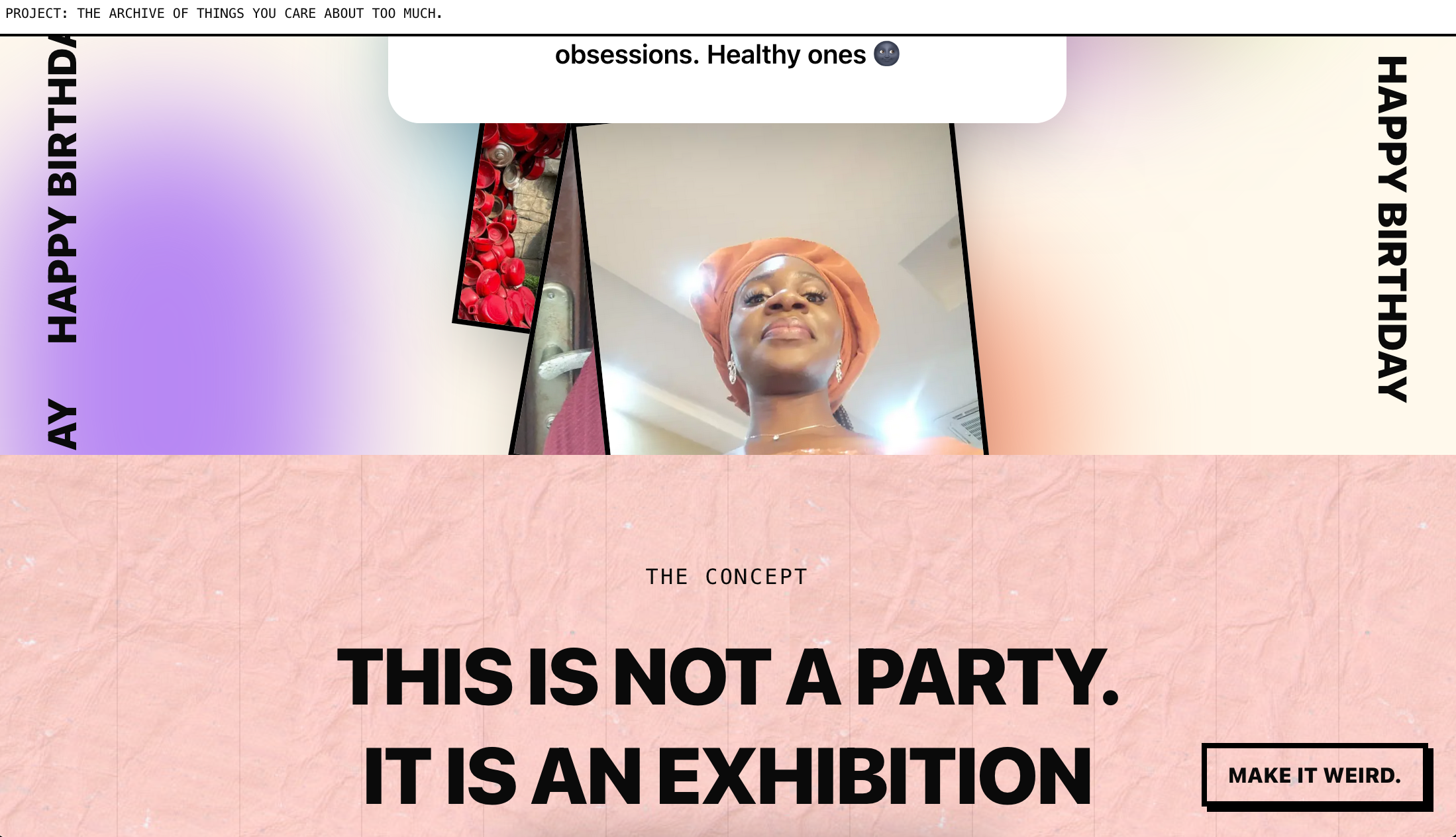
A bespoke booking portal where users are “inductees.” The app takes users through a narrative flow, collecting their technical interests (Geek Level) and topics of discussion, culminating in a custom-built slot picker. It features a neo-brutalist “Ticket Stub” success state that users can screenshot as their “Entry Permit.”
Technical decisions
I chose Framer Motion for state-driven transitions because I needed the UI to feel “alive”—as users submit text, the previous question exits and the next slides in with physics-based easing.
Mid-development, I faced a major blocker: Calendly’s embed was rejected in cross-origin contexts due to Stripe’s SameSite cookie policy. I decided to strip the dependency and build a Custom Slot Picker. By defining availability in a local constant and syncing final submissions to a single Firestore document, I eliminated all 3rd-party security errors and reduced the bundle size significantly.
What I learned
This project taught me the importance of graceful degradation. When the 3rd-party tool failed, I had to quickly architect a custom solution that maintained the UI’s integrity. I also learned that “friction” in UX isn’t always bad—by adding deliberate animations and a “Fine Print” modal, I created a sense of exclusivity that a standard form lacks.